The moment your inbox pings after 6 pm, the mind starts sprinting: Did I reply fast enough? Did I miss something? Nah. It’s time to set healthy boundaries around work after hours, and you can do it without turning your life into a compliance meeting.
Let’s ditch the guilt trips and get practical. Boundaries aren’t punishment; they’re a lifeline for your sanity, creativity, and that questionable sleep schedule you pretend to love. Ready to reclaim your evenings? Let’s go.
What healthy boundaries around work after hours actually look like
So you want breathing room without feeling like you’re abandoning your team. Here’s the baseline: clear times, clear expectations, and clear communication. It’s not magic—it’s consistency with a dash of empathy for others who rely on you. FYI, boundaries benefit everyone in the long run, not just you.
– Define a hard stop time each day.
– Create a grip on responsiveness right after work.
– Communicate boundaries with kindness, not brutality.
– Build rituals that bookend your day and protect your off-hours.
Set a real daily cutoff (no, 5:01 doesn’t count)

A real cutoff means you actually end work at a specific time and don’t drift back in later for “just one more thing.” It’s tough at first, but the payoff is clarity and respect—yours and others’.
– Pick a specific time you’ll stop, not a vague “soon.”
– Turn off nonessential notifications after that time.
– Schedule a wind-down routine to sign off with intention.
– If a deadline looms, communicate it early and reset expectations.
Free workbook: Want a simple way to practice this? Get the free 7-Day Couples Communication Reset.
Get the Free 7-Day ResetHow to decide your cutoff time
– Consider your energy patterns: when do you feel like you can truly unplug?
– Align with your team’s rhythms: what’s the typical after-hours expectation in your role?
– Leave room for emergencies: specify what truly qualifies as urgent.
Craft the messages that protect your after-hours life
Words matter. A simple, honest template goes a long way. The goal isn’t to be dramatic; it’s to set expectations so people know when you’ll respond and when you won’t.
– Use a standing auto-reply or status update after hours.
– Include your cutoff time and how urgent matters should be handled.
– Be human: a short note about your boundary helps people accept it.
Templates you can borrow
– “Thanks for reaching out. I’m offline after 6:30 pm and will respond tomorrow morning. If this is urgent, please contact [backup contact].”
– “I’ve set a hard stop for work at 7 pm. I’ll review this first thing tomorrow and get back to you.”
– “I get the sleep thing too—let’s reconnect at [time]. If it’s truly urgent, ping [alternative channel], and I’ll check in.”
Create rituals that signify “work is done”
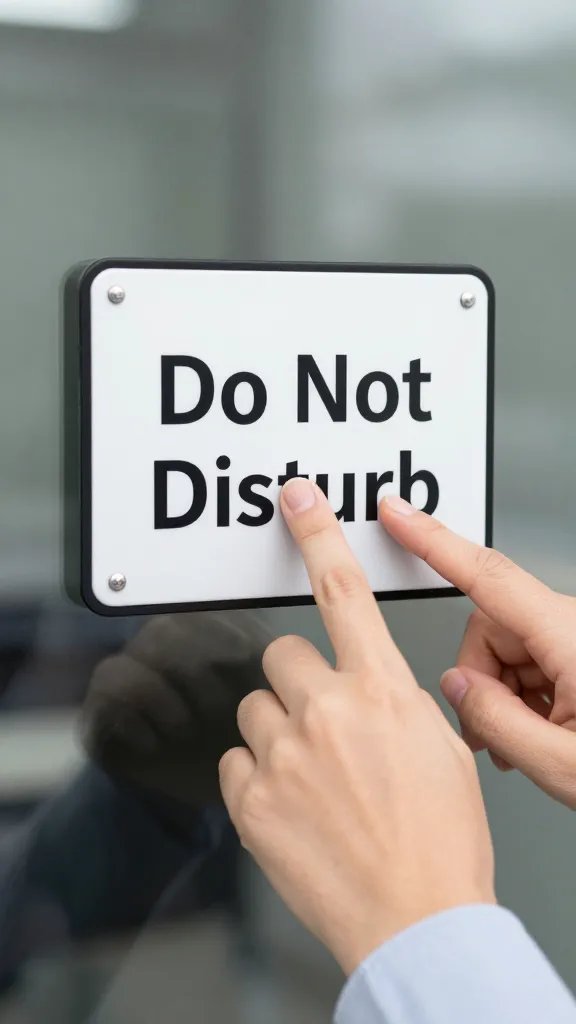
Rituals are anchors. They tell your brain it’s time to switch off, not just switch tasks. A tiny routine can do heavy lifting.
– Do a quick end-of-day recap: what’s done, what’s pending, what’s the first thing tomorrow.
– Physically close your laptop or shut the work apps to create a tangible boundary.
– Switch to a personal activity: gym, walk, hobby, or a ridiculous amount of TV if that’s your thing.
Ritual ideas that actually work
– A 2-minute gratitude note for your day: what went well and what you’re letting go.
– Set a “distance goal” from your work space: time to unplug means leaving the desk or turning off the monitor.
– A short playlist or scent cue that signals off-hours.
Turn expectations into agreements (without turning into a jerk)
Boundaries only work if others buy in. That means conversations, not proclamations. You want sustainable change, not a monthly political debate about your availability.
– Have a quick chat with your manager about after-hours expectations.
– Align on what constitutes urgency and what can wait until morning.
– Involve teammates: shared norms beat singular mandates.
Talking points that keep things friendly
– “I’m protecting evenings for rest and family, but I’m here for critical issues. Here’s how to flag urgent items…”
– “I respond within X hours after hours. If it’s truly urgent, reach me via [channel].”
– “If you notice a pattern of late-night requests, let’s adjust how we plan sprints or deadlines.”
Need help putting this into practice? The free 7-Day Couples Communication Reset gives you simple daily prompts for calmer conversations.
Download the Free ResetLeverage technology (without turning into a cyborg)

Tech can be your ally or your kryptonite. Use it to reinforce boundaries, not erase them.
– Schedule send times: delay non-urgent emails until business hours.
– Use status indicators: “Out of the office” messages that reflect your hours and how to reach the person who handles emergencies.
– Create “do not disturb” windows for deep work and personal time.
What to automate (and what not to)
– Automate: after-hours out-of-office replies, calendar blocks, and task reminders for the next day.
– Don’t automate: the sense that you must always be on. A personal response when you’re in a good headspace is more authentic.
When boundaries collide with burnout or a heavy project
There are moments when you’ll feel the tug back toward work. That’s not failure—that’s life. The trick is to respond with intention, not reflex.
– Acknowledge the pressure, then choose your next best action.
– Communicate early about potential delays or flexible hours rather than ghosting the team.
– Protect at least one off-hours block per week for restoration.
Dealing with impossible deadlines
– Break the work into smaller chunks and set interim milestones.
– Propose a realistic after-hours plan: what will be done, by when, and who’s involved.
– Involve leadership if the deadline is unreasonable for the team’s health.
FAQ
Q: How do I enforce boundaries without seeming uncooperative?
Boundaries work when you pair them with clear, kind communication. State your hours, explain why they exist, and offer a reliable path for urgent issues. Most people respect boundaries when they see consistency and respect in return.
Q: What if my boss or team pushes back on after-hours rules?
Start with the data: show how a defined boundary leads to better focus, fewer errors, and steady progress. Offer a concrete plan for urgent matters and propose a trial period to prove it’s workable.
Q: How do I handle after-hours emergencies without burning out?
Define what truly constitutes an emergency, and ensure there’s a documented escalation path. If it’s not truly urgent, schedule it for the next business day. If it is, designate a single point of contact and a clear time frame for response.
Q: Can I still be responsive and maintain boundaries?
Yes. Responsiveness isn’t the same as constant availability. You can reply within your stated window or through a designated channel. It’s about choosing your moments, not abandoning the ship.
Q: What if I have inconsistent schedules due to client time zones?
Set staggered boundaries that respect both sides. Communicate your core hours and offer a couple of alternate windows for urgent collaboration. Flexibility within reason beats chaos.
Conclusion
Boundaries aren’t a punishment; they’re a signal that you value your energy, your relationships, and your work. When you set a clear cutoff, craft honest messages, ritualize closure, and lean into smart tech, you reclaim your evenings without wrecking productivity. It’s not about perfect rigidity—it’s about sustainable flow. So pick your cutoffs, test your boundaries, and tweak as you go. Your future self will thank you (and perhaps even your dog, who finally gets your full attention at dinner).
Ready to practice better communication?
Start with the free 7-Day Couples Communication Reset, or explore the full Couples Communication Workbook & Handbook for deeper guided exercises.