You love pizza. They love tacos. Both are delicious, but not the same dinner.
Love works like that too: you can care deeply and still miss each other’s signals. If you’ve ever thought, “But I’m doing so much—why don’t they feel it?” you’ve probably run into love languages. Good news: once you learn to speak each other’s, things click.
No translation app required.
Free workbook: Want a simple way to practice this? Get the free 7-Day Couples Communication Reset.
Get the Free 7-Day ResetWhat “Love Languages” Actually Mean
Love languages are the common ways people prefer to give and receive love. Gary Chapman popularized five: Words of Affirmation, Quality Time, Acts of Service, Physical Touch, and Gifts. You likely use all five sometimes, but one or two feel like home. Here’s the gist:
- Words of Affirmation: “I appreciate you,” “You crushed that presentation,” “I love you.”
- Quality Time: Undivided attention, no phones, no multitasking. Just you two.
- Acts of Service: Doing helpful things—errands, chores, solving problems.
- Physical Touch: Hugs, hand-holding, back rubs, cuddles on the couch.
- Gifts: Thoughtful items or surprises that say, “I saw this and thought of you.”
Do these overlap? Totally. But the primary one tends to carry the most emotional weight.
Miss it consistently and things feel off, even when you try hard.
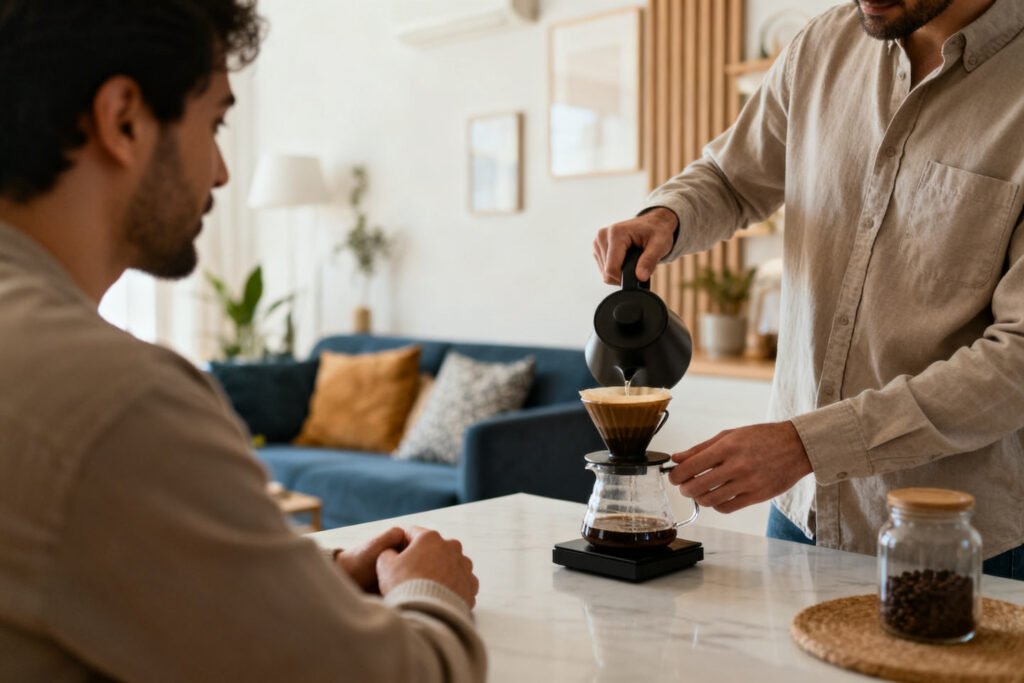
Spotting Your Partner’s Language (Without a Quiz)
Quizzes help, but real-life detective work works better. Notice what your partner does for you, and what upsets them most. Look for clues:
- What they complain about: “We never spend time together” screams Quality Time.
- What they ask for: “Can we hold hands?” = Physical Touch. “Can you help with dinner?” = Acts of Service.
- How they love you: People often give love how they want to receive it. FYI, not always, but often.
Quick conversation starter
Try: “When do you feel most loved by me?” and “What’s something small I could do weekly that would make you feel cared for?” Keep it low-pressure.
You’re not on trial; you’re just comparing maps.
Translate, Don’t Debate
Your way isn’t better. It’s just yours. So instead of convincing your partner that your language is “more practical,” translate your love into theirs. Think of it like this:
- If you’re a Words person but they’re Acts: Write a note, sure, but also take the trash out without fanfare.
- If you’re Touch and they’re Time: Snuggle during an actual scheduled hangout—no doom-scrolling allowed.
- If you’re Gifts and they’re Words: Add a short card. The combo is magic.
Set expectations clearly
You can’t read minds, and neither can they (tragic, I know). Agree on a couple of specific, repeatable actions that hit the mark. Consistency beats grand gestures every time, IMO.
Playbooks for Each Love Language
You want tactical? Let’s get tactical.
Pick your partner’s primary and sprinkle in two or three ideas this week.
Words of Affirmation
Do:
- Send a midday text: “Thinking of you. Good luck with [thing]!”
- Say one specific appreciation daily: “Thanks for handling the insurance call—huge help.”
- Leave a sticky note on the mirror.
Avoid: Sarcasm that stings, public teasing, or silence after big efforts.
Quality Time
Do:
- Plan a no-phones walk or breakfast once a week.
- Start a mini ritual: 15-minute nightly check-in.
- Share a hobby: co-op game, cooking, yoga, whatever doesn’t bore you to tears.
Avoid: Half-attention. Multitasking reads as “you’re not important.”
Acts of Service
Do:
- Ask, “What’s one task I can take off your plate today?” Then do it.
- Maintain their preferences—coffee the way they like it, gas in the car.
- Create systems: auto-bill pay, labeled pantry, calendar reminders.
Avoid: Doing random things they didn’t want, then expecting applause.
Ask first.
Physical Touch
Do:
- Offer touch throughout the day: greeting hugs, shoulder squeezes.
- Snuggle during shows; hold hands while walking.
- Give a short massage after a long day—10 minutes counts.
Avoid: Withholding touch during conflict for days. Communicate boundaries, but don’t ice them out.
Gifts
Do:
- Keep a notes app list of things they mention.
- Go small and thoughtful: their favorite snack, a book by a beloved author.
- Make it personal: a photo printed, a playlist, a plant they’ll name Harold.
Avoid: Last-minute generic stuff that screams “I forgot.” Price matters less than thought.

Conflict: Where Love Languages Go to Die (Unless You’re Smart)
Under stress, people double down on their primary language. If you miss it then, resentment grows fast.
Need help putting this into practice? The free 7-Day Couples Communication Reset gives you simple daily prompts for calmer conversations.
Download the Free ResetSo build a conflict game plan that uses both languages. Try this framework:
- Pause: Take 10-20 minutes to cool off.
- Lead with their language: Start with a hug (Touch), a thanks (Words), or “Can we sit and talk for 20 minutes?” (Time).
- Own your part: One clear sentence. No “but.”
- Offer repair: “I’ll handle dishes this week” (Acts) or a small surprise tomorrow (Gifts).
Once you know how you each feel loved, small daily gestures land better. The free 7-Day Couples Communication Reset helps you put that into practice.
Boundaries still matter
Love languages don’t override consent or values. You can honor Touch without cuddling when sick.
You can honor Gifts without breaking the budget. Healthy love has limits and clarity.
Make It a Habit, Not a Phase
Anyone can do a cute weekend blitz. Real connection shows up on random Tuesdays in February. Build love-language habits into your routines so they survive busy seasons. Simple habit ideas:
- Words: 1 compliment at breakfast.
- Time: 2 tech-free meals per week.
- Acts: 1 chore swap on high-stress days.
- Touch: 20-second hug when you reunite (it releases oxytocin, FYI).
- Gifts: 1 tiny surprise each month.
Track what lands.
If something feels meh, tweak it. Relationships are living systems, not IKEA furniture—no fixed manual.
Common Traps (And How to Dodge Them)
Trap #1: Scoring points If you keep a mental scoreboard, everyone loses. Give because you care, not to cash in later. Trap #2: Stereotypes Men don’t “always” prefer Touch.
Women don’t “always” prefer Gifts. Ask your actual person. Trap #3: Grand gesture addiction Huge surprises feel great. But if daily life feels lonely, the Valentine’s Day fireworks won’t fix it, IMO. Trap #4: Ignoring your own language You matter too.
Share yours clearly and ask for it. People can’t support needs they can’t see.

FAQ
Can my love language change over time?
Yes. Big life shifts—new jobs, kids, stress—can reshuffle priorities.
Re-check every few months with a simple, “What’s hitting the spot lately?” You’ll keep the connection fresh and avoid assuming last year’s settings still apply.
What if our primary languages clash?
Great. Now you know the work. Aim for a mix: lead with theirs most of the time, and ask for yours directly.
Create a weekly rhythm that includes both—maybe Friday date night (Time) and Sunday morning notes (Words). Compromise isn’t romantic; it’s effective.
For more ways to feel connected, see daily connection rituals for busy couples, make your partner feel heard, and validate your partner’s feelings.
Do I need to hit all five languages?
Not daily. Focus on their top one or two consistently, then sprinkle the rest when it’s natural.
Think pillars first, then decorations. You’ll save energy and build a stronger foundation.
How do I handle it if I feel silly or awkward?
Name it. “This feels cheesy, but I’m trying because you matter.” Vulnerability beats perfection. You’ll get smoother with practice, and your effort counts more than flawless execution.
What if I keep forgetting?
Use tools.
Set calendar nudges, stick a note on the fridge, or keep a running idea list. Habits beat memory. Once it lives in your routine, you won’t need reminders.
Is this just another trend?
Labels come and go, but the core idea—people feel loved in different ways—sticks.
If the term “love languages” bugs you, ditch it and keep the practice. Results > branding, IMO.
Wrapping It Up
You don’t need to become a different person to love better. You just need to speak a little more of your partner’s dialect and invite them into yours.
Start small, stay consistent, and laugh when you fumble. Love gets easier when you stop guessing and start translating.
To go deeper on understanding and meeting each other’s needs, The Couples Communication Workbook & Handbook is a warm, practical companion.
Ready to practice better communication?
Start with the free 7-Day Couples Communication Reset, or explore the full Couples Communication Workbook & Handbook for deeper guided exercises.